
PVC Sofubi Paint Unevenness Control: Paint Range Checks Before Mass Production
For PVC sofubi and soft vinyl-style goods, the final look depends on paint range, base PVC color, surface finish, raised details, and masking method. Defining paint unevenness, overflow, thin coating, and boundary tolerance before mass production helps reduce approval loops and post-production defect disputes.
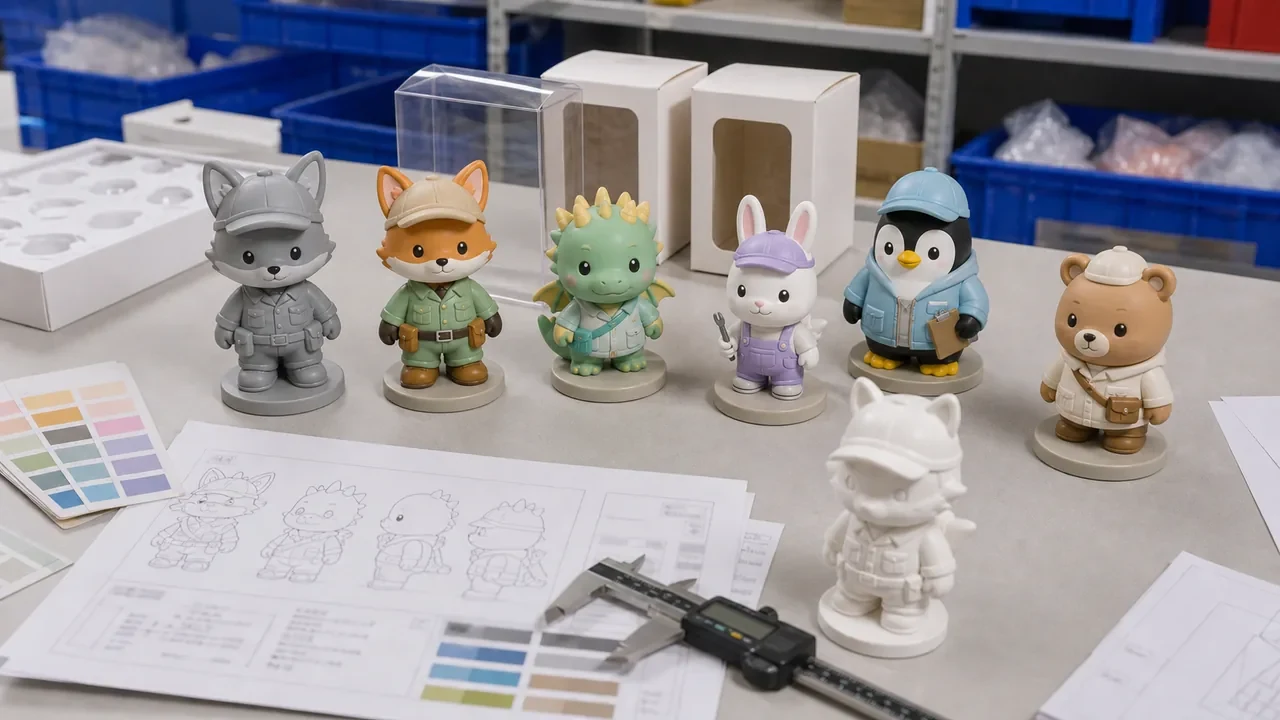
Pre-Production Paint Checklist
Paint defects are difficult to repair at scale, so the approval standard should be fixed during sampling.
| Open | Checking | Done |
|---|---|---|
| Paint range sheet | Mark paint areas on front, side, back, raised, and recessed details | |
| Color standard | Confirm PANTONE / DIC, physical color samples, and base PVC color difference | |
| Surface finish | Decide matte, gloss, translucent, glitter, or other finish conditions | |
| Paint boundary | Define tolerance for overflow, bleeding, thin paint, and missing paint | |
| Raised details | Check grooves, corners, fine lines, face parts, and costume parts | |
| SKU control | Link each colorway and variant to approved samples | |
| Inspection criteria | Share acceptable limit samples, key inspection points, and photo-based NG examples |
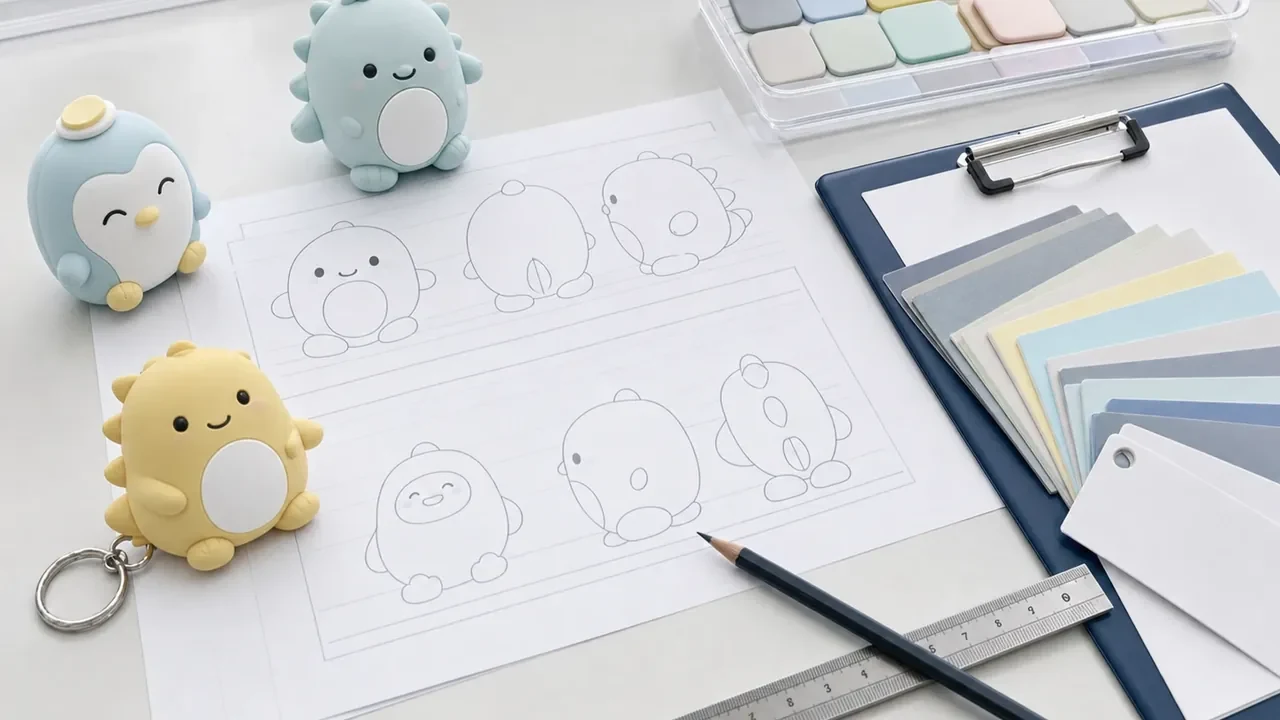
Prepare Artwork and Paint Range Sheets Separately
A design image alone does not tell the factory exactly which surfaces need paint. Separate front, side, back, raised, and recessed areas, and define where base PVC color should remain visible.
- Separate painted areas, unpainted PVC base areas, and printed details
- Add enlarged views for thin lines, facial details, and costume boundaries
- Specify back or bottom surfaces when they matter for sales quality
- Keep approval images and production specification sheets aligned
A paint range sheet helps separate color issues from range issues during sample revision.
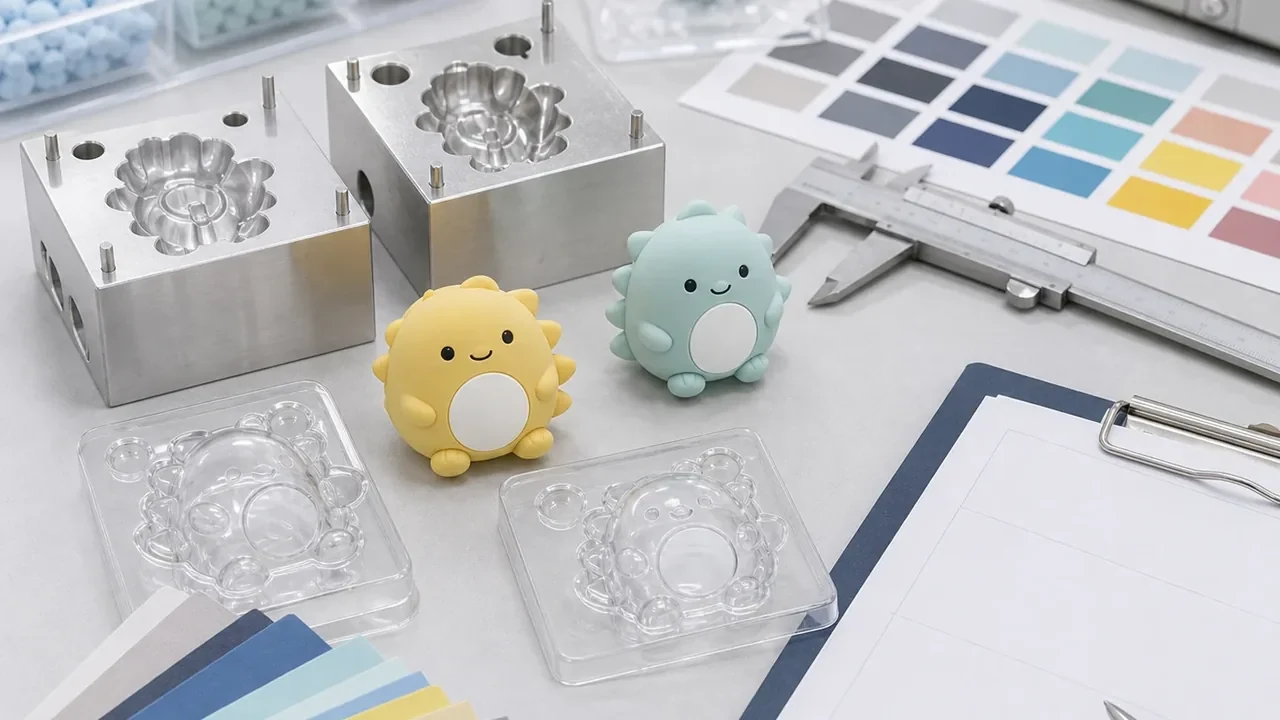
Check Color Standard, PVC Base Color, and Surface Finish Together
The same paint can look different depending on PVC base color, material thickness, and finish. Review color standards together with the actual material and lighting condition.
- Use PANTONE / DIC together with physical color samples
- Check base-color influence on white, dark, and translucent PVC
- Confirm matte, gloss, and semi-gloss finish with samples
- Review how color unevenness appears on broad areas and fine details
For character-goods reproduction, keep approved color samples by SKU so later production lots can be compared consistently.
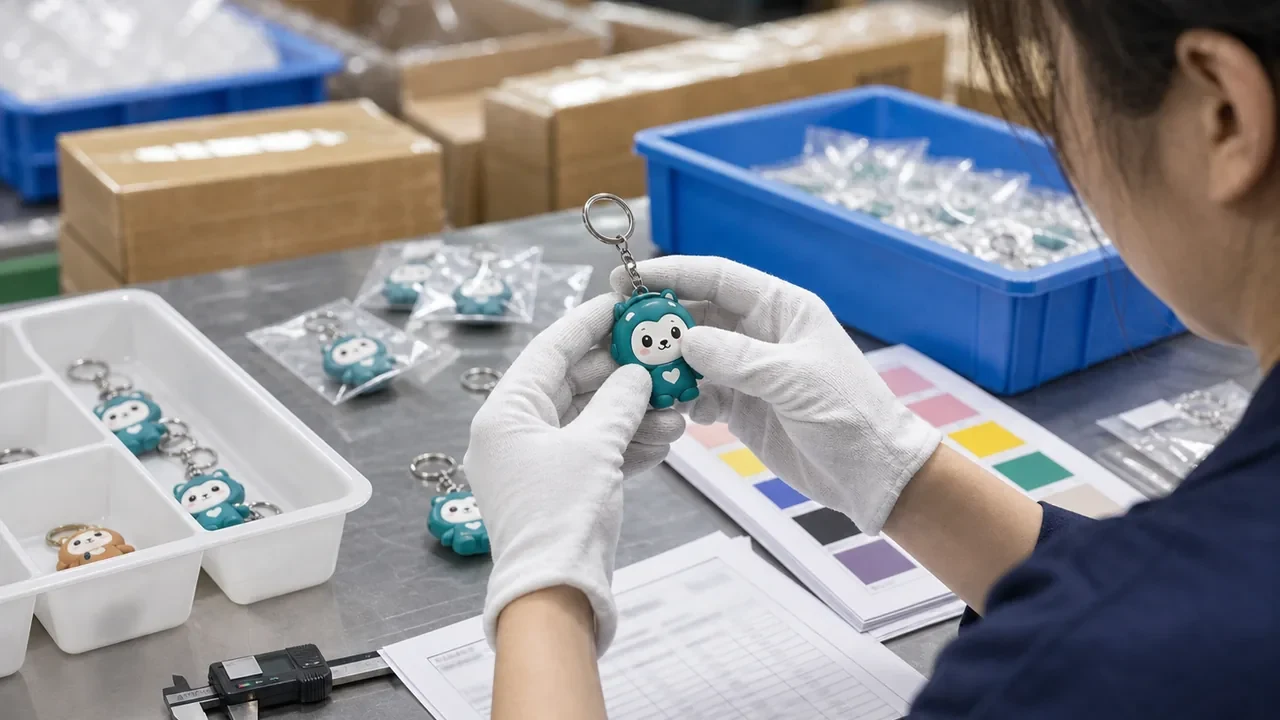
Set Criteria for Uneven Paint, Overflow, and Thin Coating
If defect judgment depends only on subjective impressions, buyers and factories may disagree. Define acceptable limits and NG examples with photos before production.
- Identify key visible areas such as faces and front-facing details
- Classify boundary bleeding, overflow, missing paint, and thin coating with photos
- Set viewing distance, lighting, and inspection angle
- Separate reworkable defects from reject-level defects
Rejecting every tiny back-side mark can affect cost and lead time. Prioritize the surfaces that matter most to sales quality.
Review Mold Details, Raised Areas, and Fine Parts
Rounded sofubi forms and raised details are attractive, but grooves and steps can make masking and spray control difficult. Review paint range together with the sculpt and adjust line width or detail depth if needed.
- Check grooves, corners, tips, hands, feet, and costume-part paint separation
- Consider printing, molded color, or simplification for very fine details
- Confirm whether jigs and masking can stay stable in production
- Decide early whether mold revision is needed after first sample review
More colors mean more labor and higher defect risk, so separate must-have paint areas from optional details.
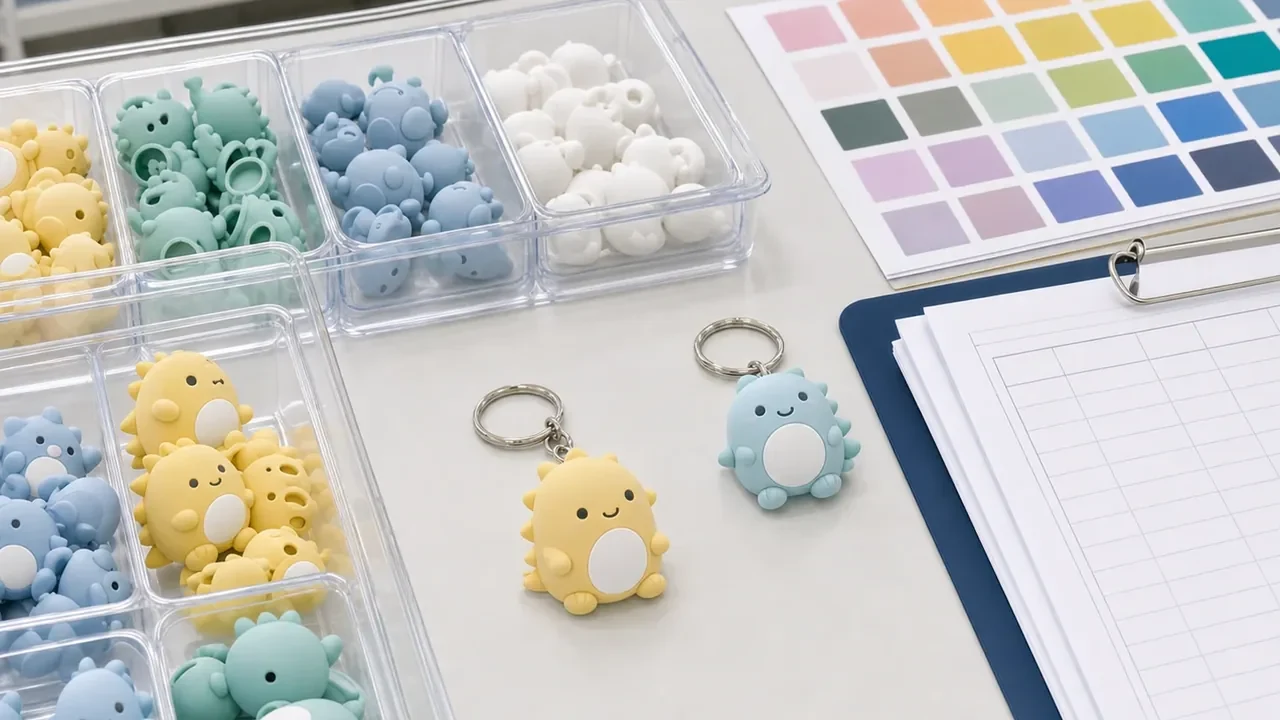
Manage Approved Samples for Multiple SKUs and Colorways
For color variants, expression variants, and limited editions, approved samples and color standards should be controlled by SKU. Confirm quantity by SKU and color-change sequence, not just total quantity.
- List SKU name, color code, quantity, and approved sample number
- Separate shared colors from SKU-specific colors
- Prevent color contamination, paint residue, and packaging mix-ups
- Keep one complete approved set before mass production
For blind packs or event goods, fix carton labels and SKU sorting rules together to reduce shipment mix-ups.
What to Check During Pilot Production
A good approval sample does not always guarantee stable mass production. Use a pilot run to confirm process stability.
Paint sequence
Confirm base color, broad areas, fine details, and top finish sequence to prevent transfer or poor drying.
- Drying time
- Layering
- Jig marks
Work jigs
Check whether masking, fixtures, and holding points affect visible surfaces.
- Fixture position
- Spray angle
- Back-side handling
Inspection limits
Add more boundary examples when factory inspectors may hesitate.
- Acceptable limit
- Rework range
- Key areas
Lot difference
Confirm color difference caused by PVC base, paint batch, or drying condition.
- Color delta
- Gloss difference
- Thick coating
Pre-packing check
Confirm adhesion and abrasion risk before packaging touches painted surfaces.
- Rubbing
- Color transfer
- Tackiness
Approval record
Keep sample photos, approval date, revision note, and final approver in one record.
- Photo log
- Change history
- Final version
Common Causes of Paint Unevenness and Prevention
Many paint problems come from missing specification details, material behavior, fixture limits, or unclear inspection criteria.
| Likely Problem | Main Cause | Pre-Production Action |
|---|---|---|
| Boundary overflow | Vague paint range or very small raised details | Confirm enlarged range sheet, tolerance, and masking method |
| Thin paint or show-through | Dark base color or insufficient coating passes | Review base color and coating count by sample |
| Uneven color | Broad area, drying condition, or spray-distance variation | Define acceptable limits by area and process condition |
| Filled-in fine details | Line width too narrow or relief too shallow | Adjust line width, use printing, or revise sculpt |
| SKU mix-up | Color change and packing rules are unclear | Unify SKU sheet, approved samples, and carton labels |
| Inspection disagreement | No photo-based NG examples | Share OK/NG photos, viewing distance, and key areas |
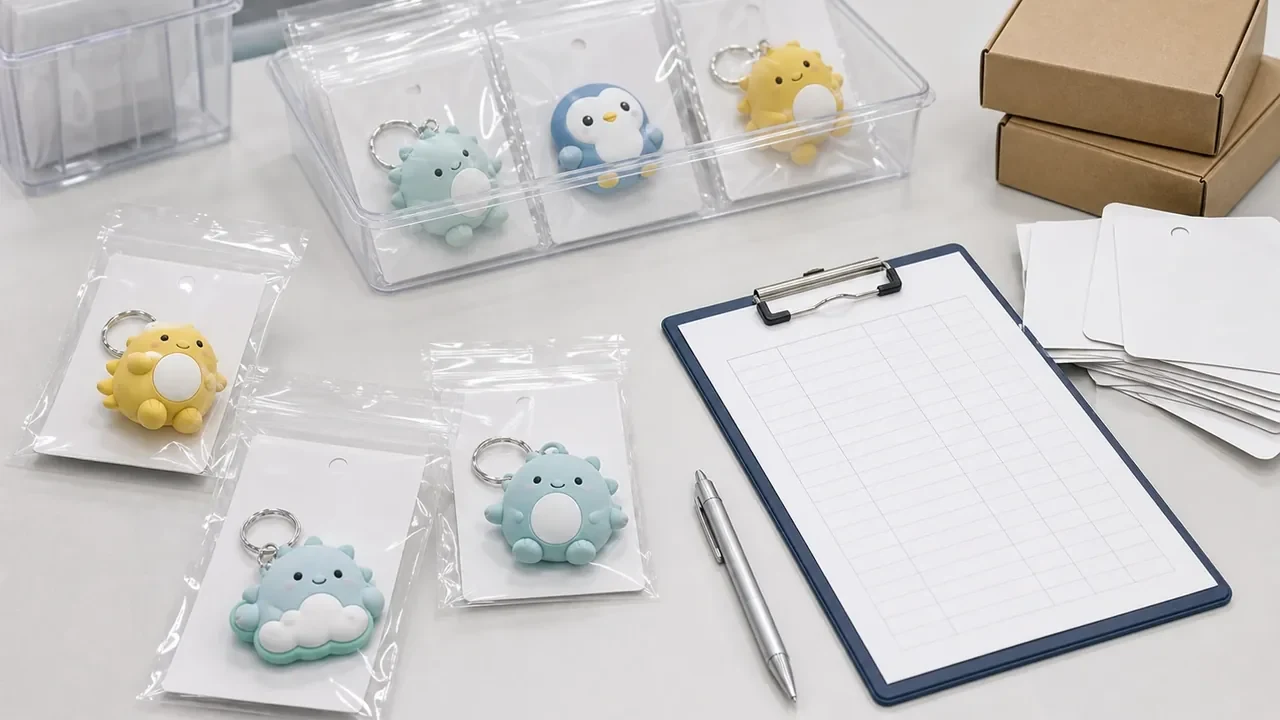
Pre-Packing Inspection and Paint Surface Protection
Painted surfaces can still rub or transfer color after drying. When deciding OPP bags, backing cards, dividers, and carton quantity, check whether painted areas will touch packaging or metal parts.
- Check appearance and adhesion before packing
- Avoid direct rubbing against cards or fittings
- Keep pre-shipment photos and inspection records
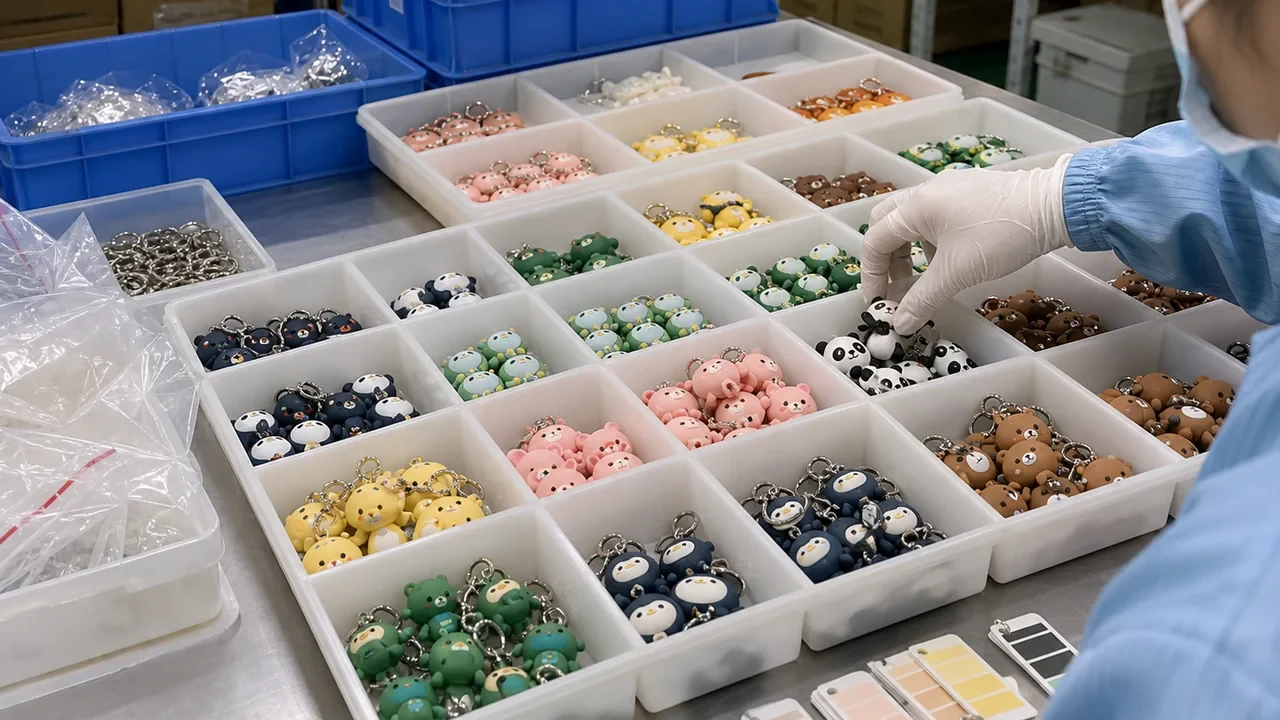
Keep Approved Samples as Production Standards
Final approved samples become the reference for color, gloss, paint range, and packaging condition. Store them so production-line checks and random inspections can compare against the same standard.
- Store approved samples by SKU
- Link color chips and photos to the same number
- Separate old and revised versions clearly
FAQ
Can PVC sofubi paint unevenness be removed completely?
In mass production, it is more practical to define key visible areas and acceptable limits. Photo-based OK/NG standards make judgment more stable.
Is a PANTONE reference enough for color matching?
PANTONE is useful, but PVC base color, gloss, and coating thickness change how the color appears. Use physical samples and pre-production review together.
Can very fine facial details be painted?
Often yes, but line width, relief depth, and production stability must be checked. Very fine parts may be better handled by printing or sculpt adjustment.
What matters when producing multiple colorways?
Control approved samples, color-change sequence, packaging labels, and carton breakdown by SKU to avoid color difference and mix-ups.
What should we prepare before asking for a quotation?
Send design images, paint range sheets, size, quantity, SKU table, color standard, packaging condition, and target lead time.
Final Checklist Before Inquiry
Prepare these seven items to discuss paint range and production risk more concretely.
- Front, side, and back paint range sheets
- PANTONE / DIC, physical color sample, and base PVC color
- Matte, gloss, translucent, or other surface finish
- OK/NG photos for uneven paint, overflow, and thin coating
- Quantity by SKU, colorway, and approved sample control method
- Packaging method, paint-surface protection, and pre-shipment criteria
- Target lead time, delivery terms, and compliance requirements
Related PVC Pages
Discuss PVC Sofubi Paint Range and Pre-Production Samples
Even if your paint range sheet or color standard is not fully organized yet, we can help identify what should be checked before production. Send your design image, quantity, and target size to start.