
Heat and Weather Resistance of PVC Products: In-Car Use and OEM Testing
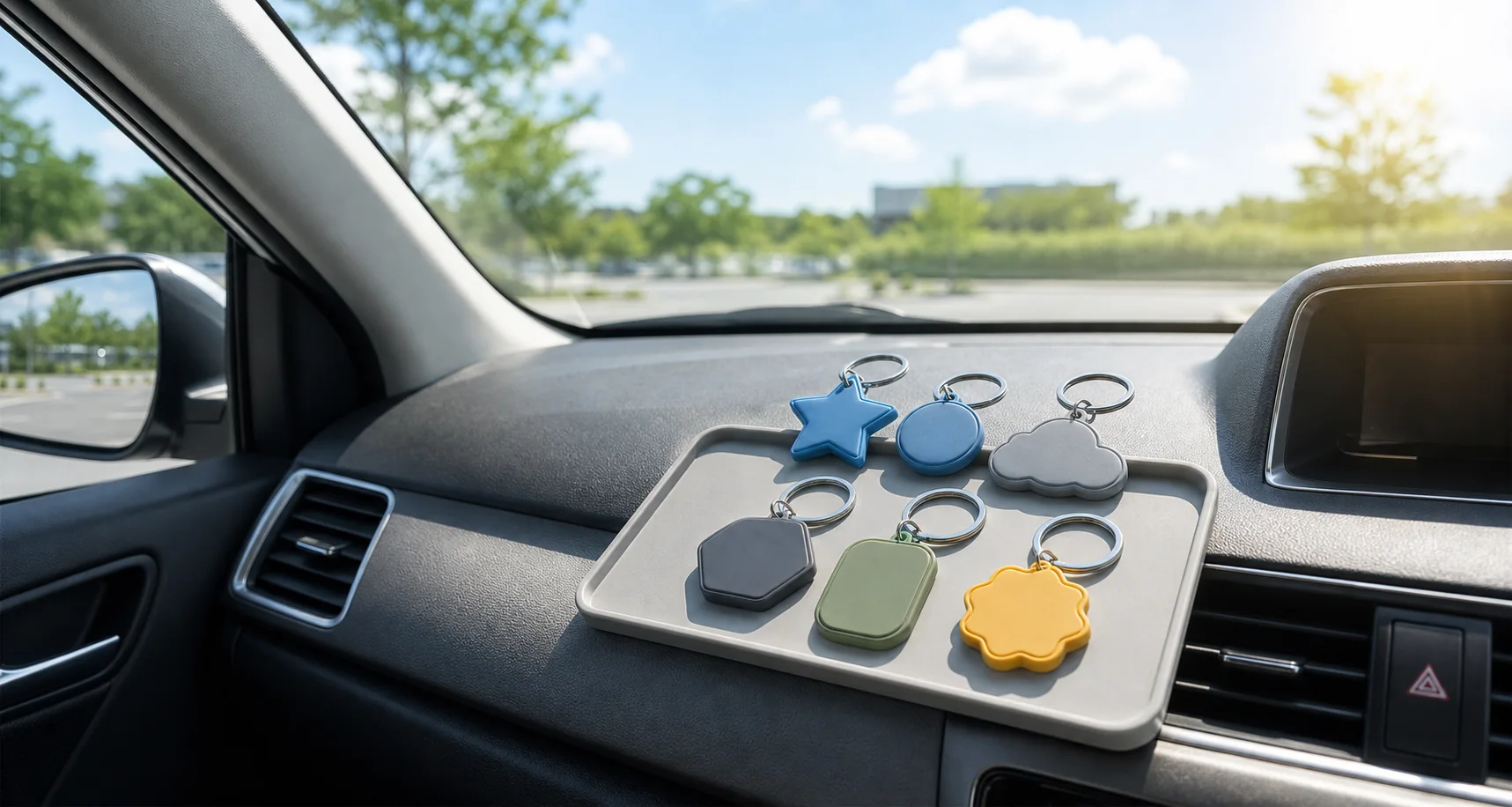
1. Key Answer: Do Not Select In-Car PVC by a Temperature Claim Alone
Parked vehicles can develop high cabin and surface temperatures, especially at the dashboard and near glazing. A generic “heat-resistant PVC” statement is therefore not enough. Define the use condition, test the finished product, and provide suitable user warnings.
2. Four Factors That Accelerate Deterioration in Vehicles
Heat
May accelerate softening, distortion, adhesive failure, print lifting, and additive migration.
UV
Can cause color change, yellowing, fading, gloss loss, hardening, and cracking.
Contact
Paint, synthetic leather, other plastics, and packaging can participate in color or additive transfer.
Sealed storage time also matters. Treat temperature, light, contact material, and duration as one use-condition set.
3. Typical Failure Modes and Evaluation
| Failure | Key variables | Pre-production evaluation |
|---|---|---|
| Warping | Hardness, thickness, weight, hanging direction | Heat-store the finished item in its use position |
| Tackiness | Plasticizer, coating, heat history, contact material | Check touch, dust pickup, and wipe response after heat |
| Color transfer | Pigment, print, bag, leather, painted surface | Use defined contact materials under pressure and heat |
| Fading/yellowing | Color, transparency, UV stabilization, ink | Record color difference, gloss, and surface condition |
| Crack or fitting failure | Aged hardness, stress points, holes and hardware | Recheck appearance and pull performance after exposure |
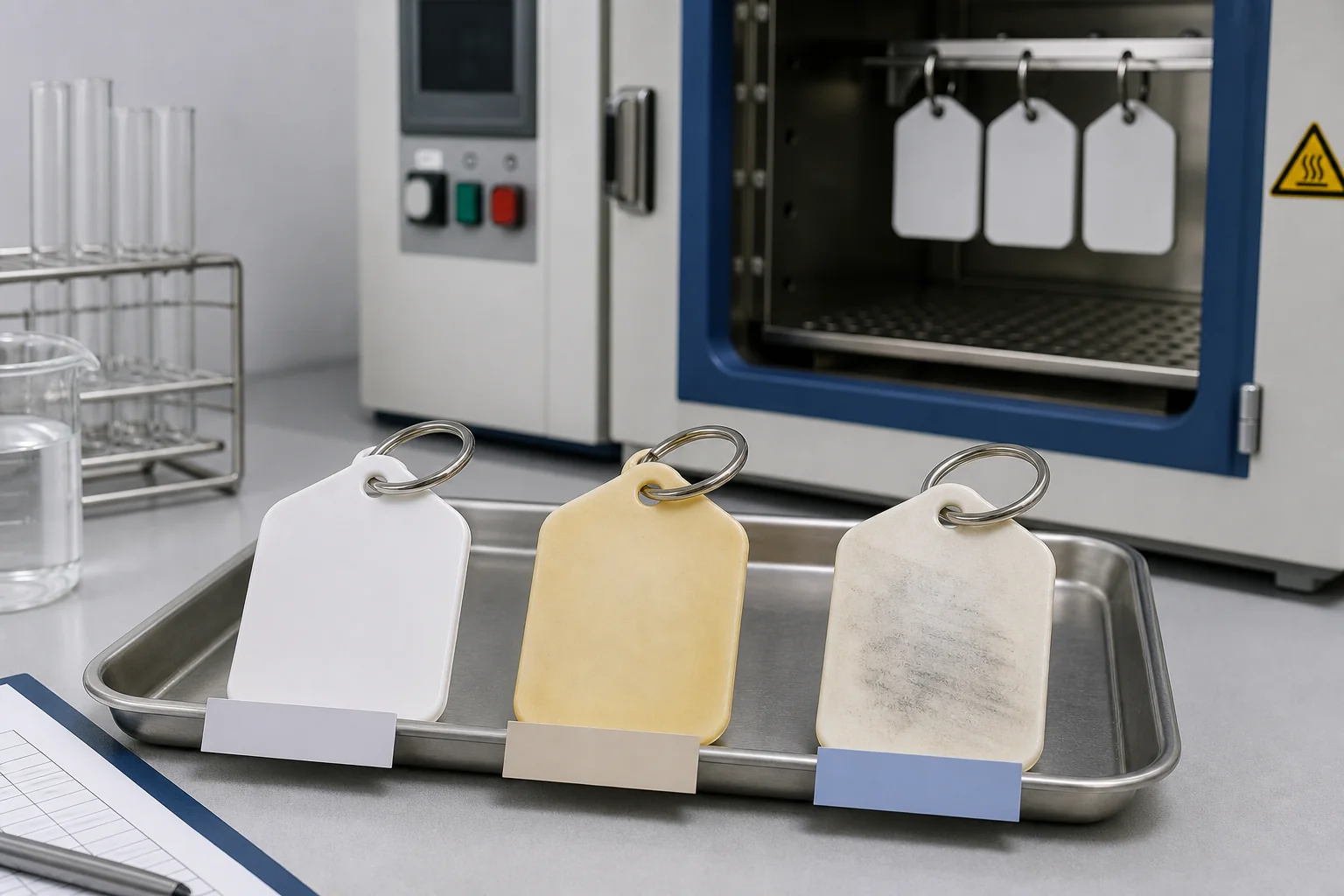
4. Why There Is No Universal Softening Temperature for PVC Goods
Flexible PVC behavior changes substantially with plasticizer type and loading. Values for rigid PVC or neat resin cannot be used directly as the service limit of a soft PVC keychain.
- Similar hardness can be produced with different formulations
- Thin, long, or one-sided hanging parts deform more easily
- Print, adhesive, or hardware may fail before the PVC body
- Short-term temperature resistance is not continuous-use resistance
5. Evaluate Heat and UV Separately, Then Check Combined Conditions
Weathering results depend on pigments, transparent grades, inks, and coatings. Xenon-arc and fluorescent-UV methods support comparison, but exposure hours cannot be converted directly into a universal number of outdoor years.
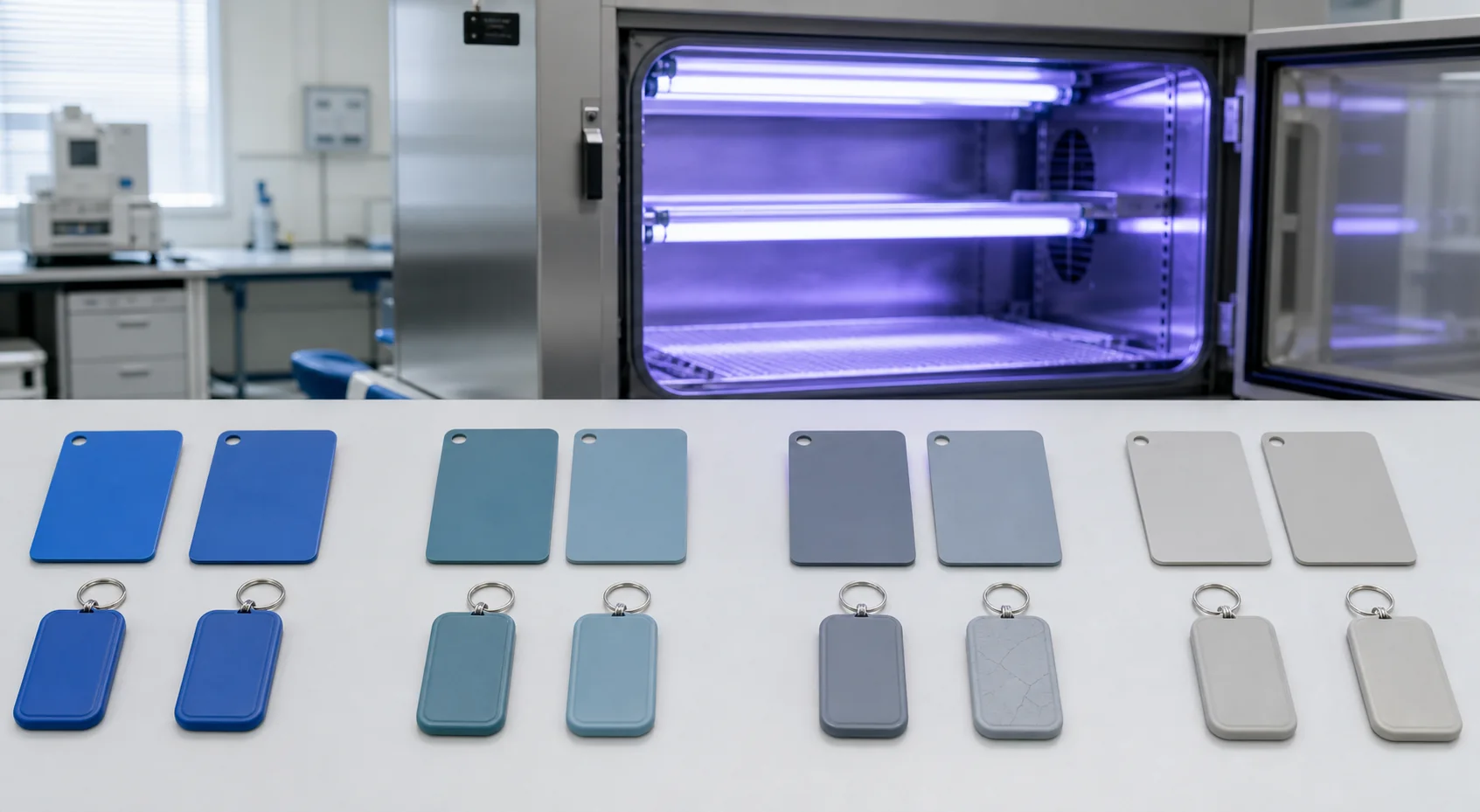
- Measure or record color, yellowing, gloss, cracking, and print fading
- Compare transparent, light, and dark colors
- Separate heat-only, light-only, and heat-plus-contact evaluations
- Retest after material, formula, print, or factory changes
6. What to Put in an OEM Specification
- Use conditionPermanent or temporary in-car use, location, season, and duration.
- MaterialHardness, color, transparency, additives, and recycled-content policy.
- ConstructionThickness, hanging direction, holes, hardware, print, adhesive, and coating.
- Heat agingTemperature, time, position, load, packaging, and evaluation timing.
- WeatheringLight source, exposure cycle, and color/gloss/crack criteria.
- Contact migrationTest the actual bag, card, leather, paint, or adjacent plastic.
- Change controlDefine reapproval after material, color, hardness, print, or factory changes.
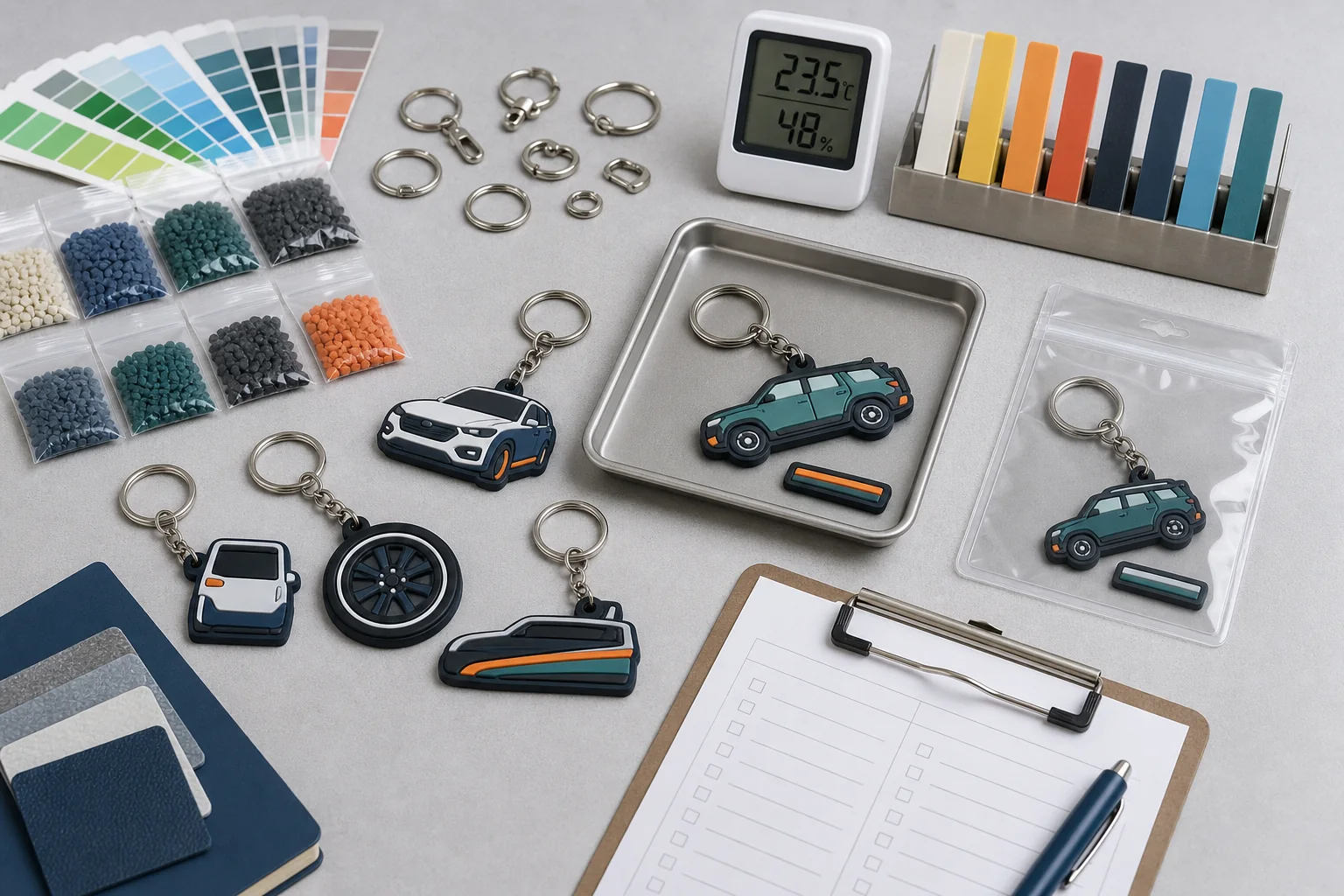
7. Set Test Conditions by Project
A 70°C, 72-hour heat-storage comparison or an accelerated-weathering test can be a useful starting point, but neither is a universal pass condition for every vehicle application. Adjust conditions to product shape, market, use duration, location, packaging, and complaint risk.
Conditions
- Reference and limit samples
- Temperature, humidity, time
- Hanging, flat, or compressed position
- Packaged or unpackaged
Criteria
- Dimensions and warpage
- Color, gloss, appearance
- Tackiness and transfer
- Print, adhesive, and hardware
8. Example Consumer Warning
If “suitable for in-car use” is claimed, distinguish temporary use from a permanent-installation warranty. Shade and sunshades may help reduce heating but do not replace product qualification.
9. OEM Pre-Order Checklist
- Define installation point and continuous exposure time
- Agree heat-aging conditions and acceptance limits
- Evaluate weathering by color and transparency
- Include print, adhesive, holes, and hardware
- Check transfer against packaging and likely contact surfaces
- Retain reference and limit samples
- Define retesting after controlled changes
- Align warnings and warranty scope
- Trace test specimens to production lots
10. References
This article provides general OEM quality-management information. Determine durability and warranty conditions from the selected formulation, finished-product construction, test conditions, and intended use.
Related Products and Services
Define PVC Formulation, Construction, and Testing Before Production
Share the installation point, duration, color, hardness, print, hardware, and packaging to define heat-aging, weathering, and contact-transfer checks.
Request a Free Quote or Test Review