
PVC Multi-SKU Mass Production: Character Quantity Control and Mix-up Prevention
If you produce PVC keychains, bag charms, magnets, and mini-figures with multiple characters, total quantity alone is not enough for factory control. Decide character-level quantities, SKU master, packaging labels, process separation, and pre-shipment reconciliation in advance to reduce quantity drift and mix-ups.
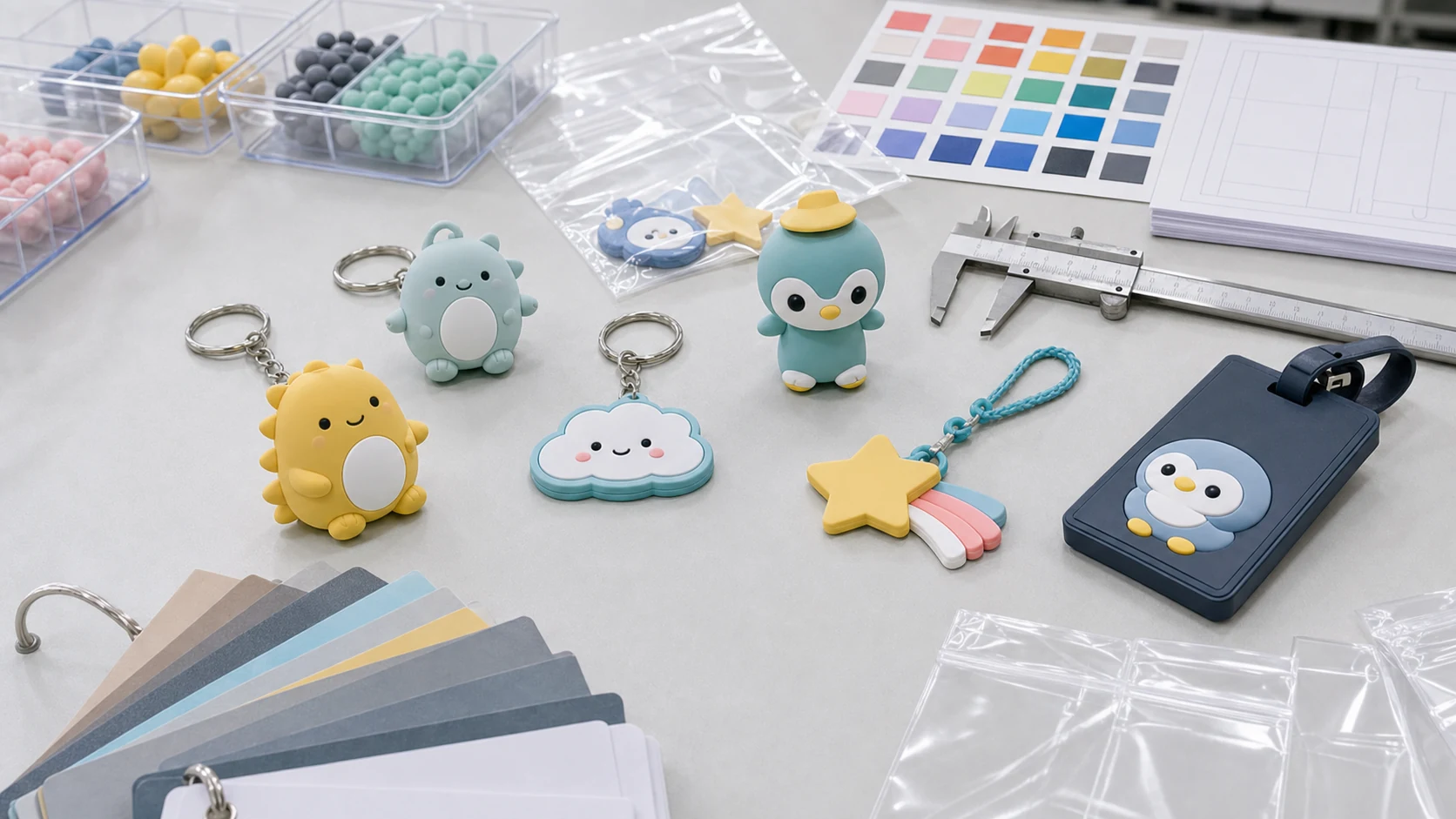
Multi-SKU Pre-production Checklist
Check that quoting, prototyping, production, packaging, and shipping can be managed with the same SKU rules.

Standardize the SKU master first
In multi-SKU production, one SKU sheet is the common language between factory and buyer. Using character names only often causes color, accessory, and packaging mix-ups, so manage by part numbers.
- Enter SKU code, character, color, and quantity as one line per SKU
- Include fasteners, backing cards, JAN, inner, and master carton labels in the same sheet
- Define short internal aliases used by the factory, not only Japanese names
- Add revision date/version to final files to avoid outdated references
It is ideal to use the same SKU number in quotation files, sample approvals, packaging instructions, inspection records, and shipment statements.
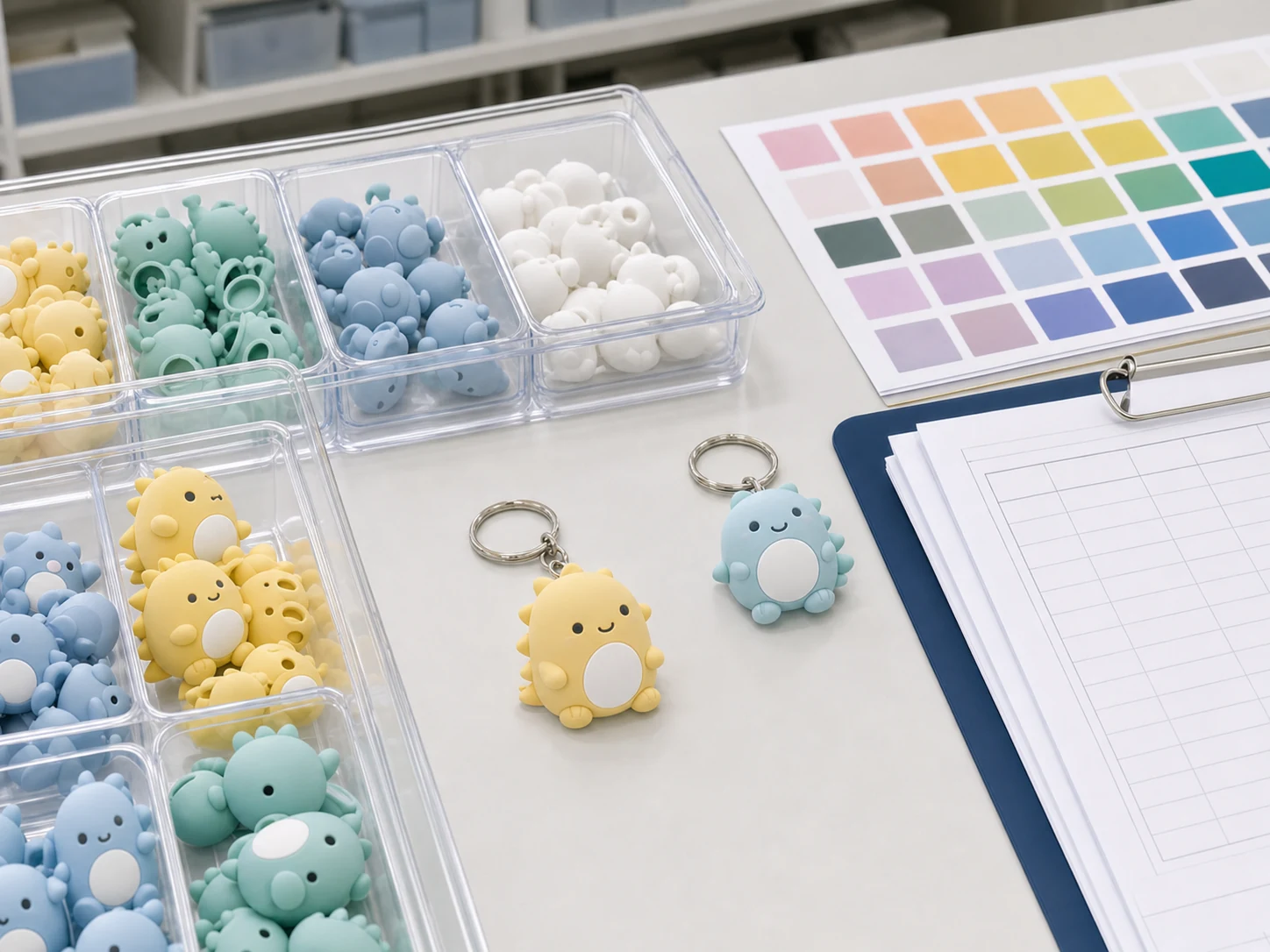
Split quantity and buffer ratio by character
Total quantity alone does not reflect mold changes, color changes, individual packaging, or shipping checks. Set mass production quantities by planned sales, buffer, and replacement defect stock for each character.
- Separate planned sales, buffer, and estimated inspection loss by SKU
- For assortments, record both ratio and set count
- For SKUs under MOQ, confirm shared colors, molds, and split-shipment options early
- Notify in advance if top-selling characters may need a top-up run
Example: for 5,000 units, management differs between 5 SKUs x 1,000 each and A:2,000 / B:1,200 / C:800 / D:600 / E:400.
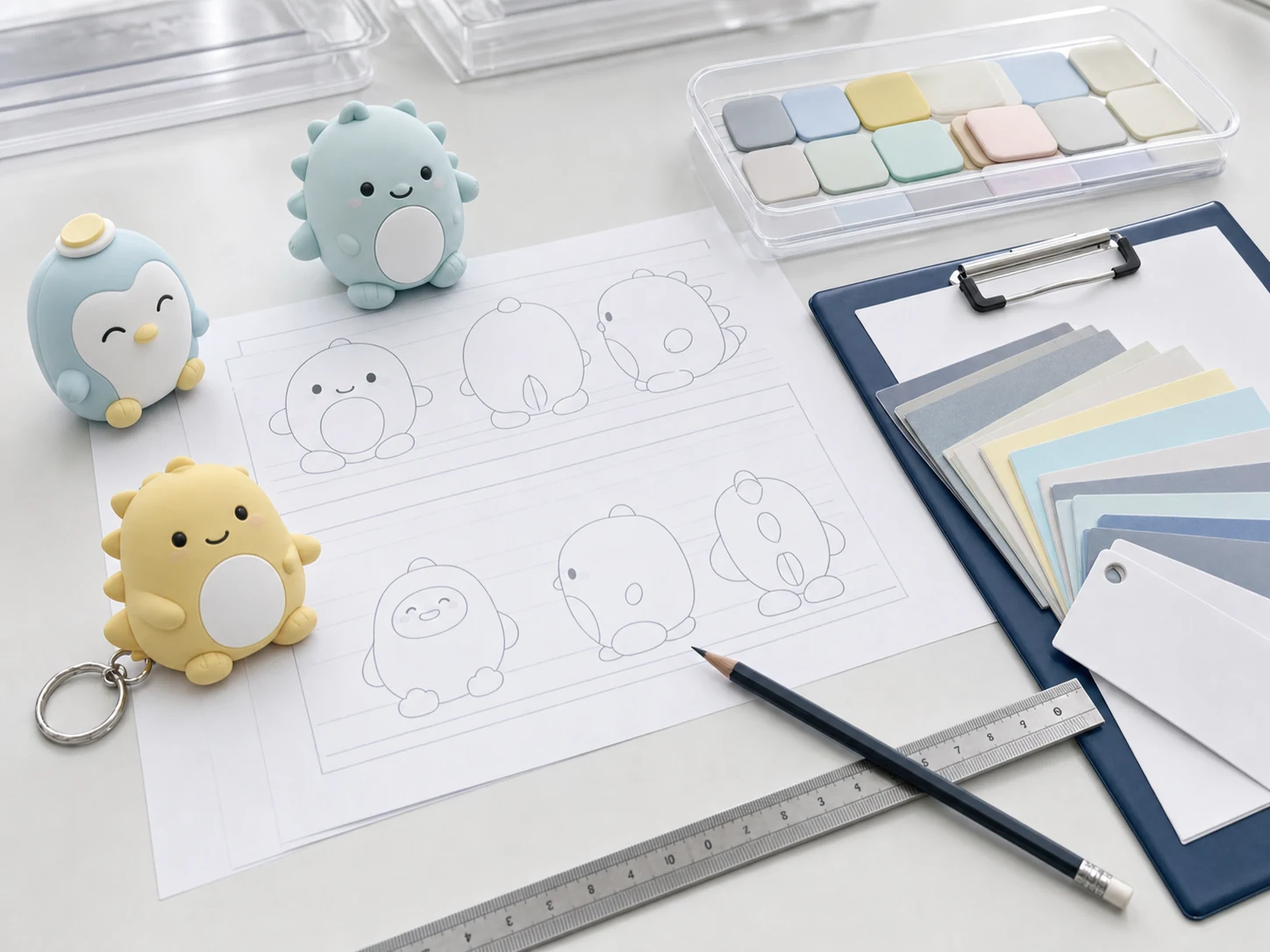
Separate design differences and common specifications
Even within one series, each character can differ in colors, relief, hole positions, fittings, and backing layout. Separating common specs and individual differences makes factory checks clearer.
- Common specs: material, thickness, hardness, fitting, packaging method
- Individual differences: shape, color count, print area, backing card design
- Check hole position and fitting orientation by SKU on drawings
- Use both Pantone/DIC references and physical samples
Keeping common specs on one page and individual differences on separate SKU pages makes changes traceable.
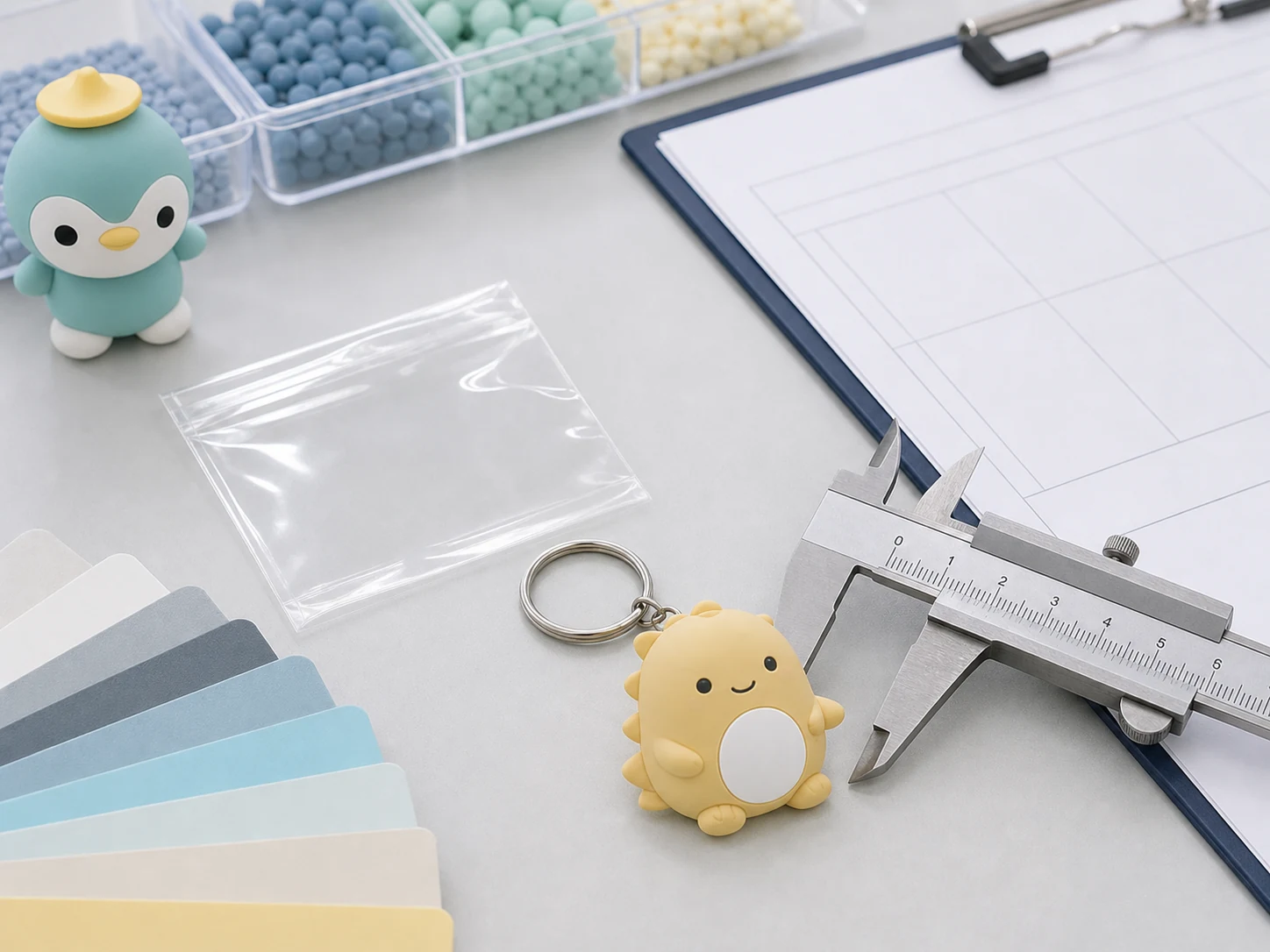
Verify specification conditions and part differences numerically
Even when character shapes vary, check thickness, tolerances, fitting holes, part materials, and carton sizes numerically. Quantified specs help standardize acceptance standards during inspection.
- Record width, height, thickness, and tolerances per SKU
- Specify fitting, strap, and magnet positions on engineering drawings
- Order common and custom parts separately
- Include post-packaging dimensions and master-carton units in specs
Even similar-looking designs may have different molds, packaging, and inspection jigs due to thickness and hole variation.
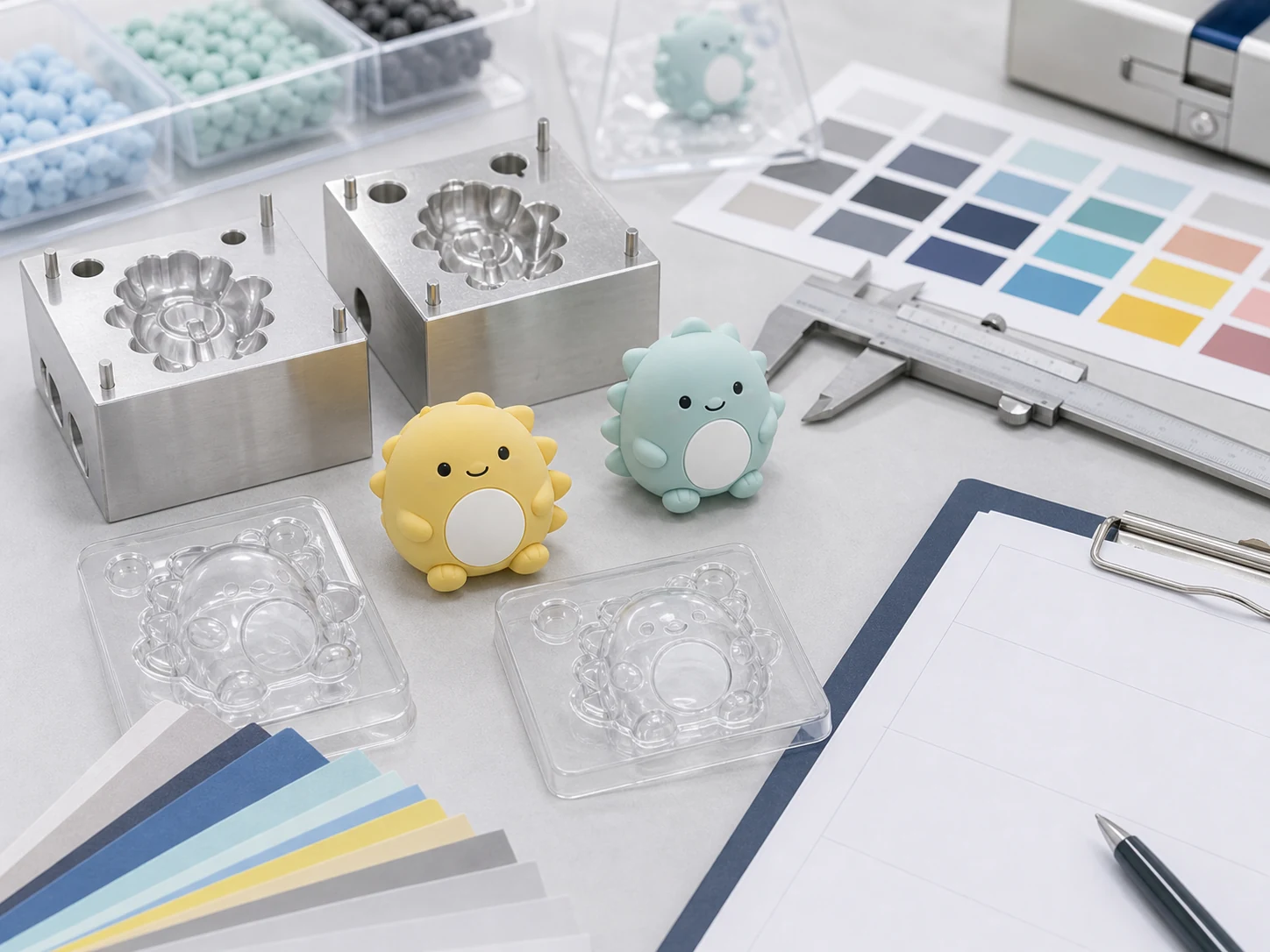
Keep Approved Samples by SKU
If you check only one pre-production sample, color tone and accessories of other SKUs may be missed. Keep Approved Samples by SKU and share the same acceptance criteria with the factory.
- Store final approved samples by SKU with serial numbers
- Capture color, thickness, fitting strength, and packaging condition with photos
- Any post-approval change should be re-approved as a new revision
- Check initial production samples side-by-side with approved samples
For color-change SKUs, define acceptance criteria and tolerance at sample approval so pre-shipment inspection is consistent.
Mix-up prevention is decided during production
Mix-ups happen not only before shipment, but also during post-molding staging, fitting, packaging, and set assembly. Separate staging, labels, and quantity records by process, and proceed only after each SKU is fully checked.
Process Separation and Line Clearance
When one SKU is done, clear benches, trays, WIP, and labels before switching to next SKU.
- Record start/end counts
- Confirm zero WIP leftovers
- Identify by tray color and shelf number
WIP Labels
Label WIP at stages such as post-molding, pre-print, pre-fitting, and pre-packaging so part identity is always visible.
- SKU code
- Process name
- Quantity
- Operator
- Date
Packaging Labels
Match markings on inner packs, inner cartons, and shipping cartons with the SKU master to avoid label errors.
- JAN
- Part number
- Character name
- Units per pack
- Country of origin
Defect and spare handling
Create a rule that defective, repaired, and spare items are not returned to the good product tray.
- Separate defect bins
- Track spare stock per SKU
- Return only after re-inspection
Assortment Ratio
For blind boxes, sets, or random inserts, lock in per-SKU input and carton ratio in advance.
- Units per box
- Units per carton
- Leftover SKU handling
Pre-shipment Matching
Before shipment, reconcile SKU sheet, packed quantity, carton marks, and delivery note.
- Accepted quantity
- Pack count
- Carton count
- Split shipment quantity
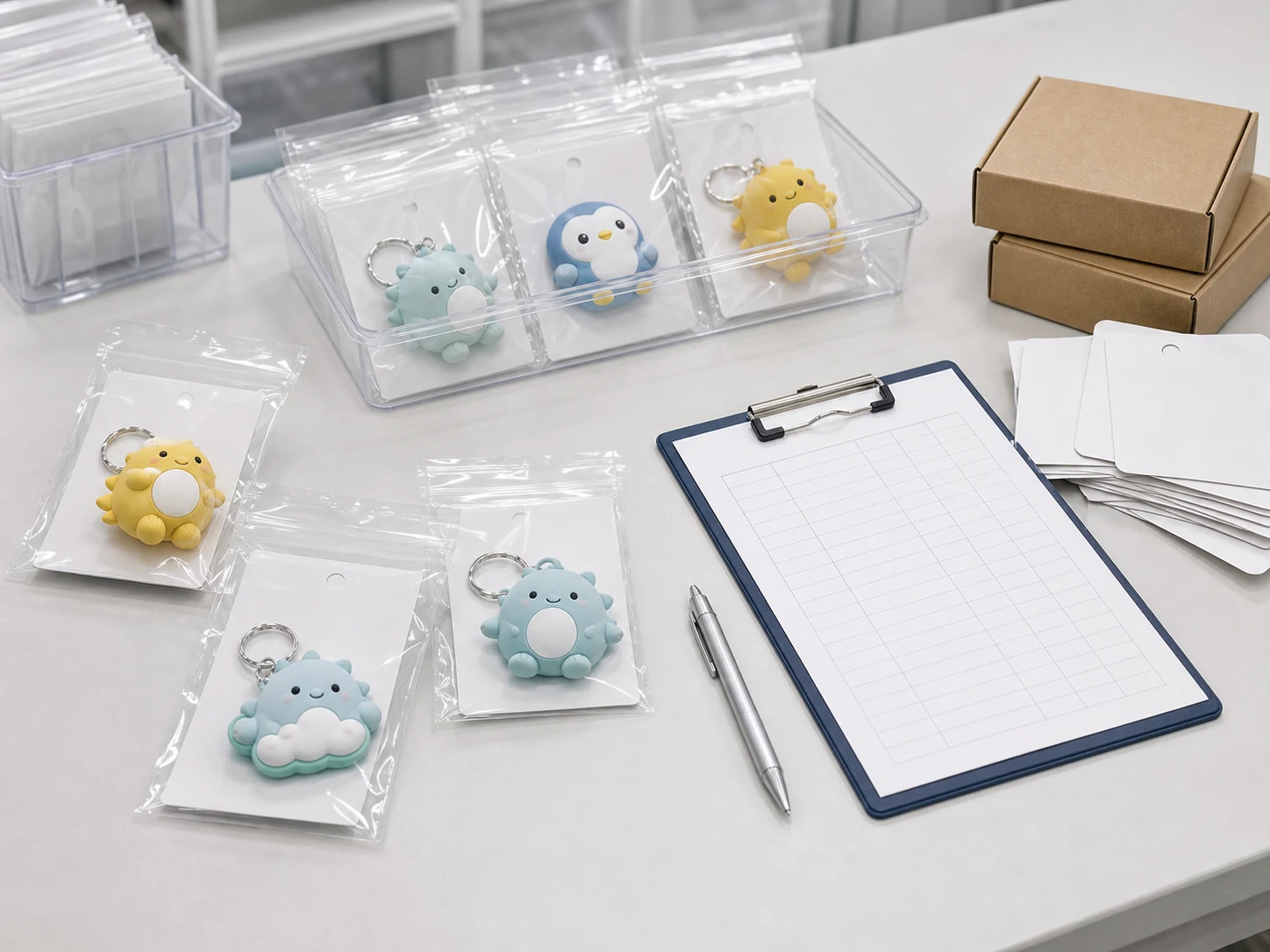
Match packaging, labels, and pre-shipment inspection with the SKU sheet
After individual packing, content checks become harder. Reconciliation before final packing is important; match carton markings, JAN, units per pack, and delivery notes against the SKU master and keep carton-level records.
- Check contents, labels, and quantity per SKU before packing
- Mark each carton with part number, color, quantity, and carton number
- Record sample count and defect count by SKU during pre-shipment inspection
- For split shipments, keep a per-SKU quantity sheet for each delivery
Common Issues and Actions in Multi-SKU Production
Mix-up prevention is centered on clear identification rules so the line is never uncertain, not only on quantity tables.
| Issue | Likely cause | Countermeasure |
|---|---|---|
| Similar-looking character colors are mixed | Tray colors are visually similar after molding, so workers rely only on eyesight | Separate by tray color, shelf code, SKU card, and work shift |
| Quantities do not match by SKU | Production is only planned by total quantity, with spare and defect counts pooled together | Record sales, spare, defects, and shipped quantities by SKU |
| Label and contents do not match | Labels were printed in bulk in advance and not checked during application | Check label, contents, and quantity one SKU at a time before packing |
| Assortment ratio becomes unbalanced | Leftover SKUs are adjusted ad hoc during set assembly | Define per-box and per-carton composition and leftover handling in advance |
| Outdated version is still used | Old files and samples remain on-site after updates | Control revisions, collect outdated materials, and create a change log |
Final Go/No-Go Checklist Before Production
After confirming the following before mass-production kickoff, character-level quantity drift and post-packing mix-ups become easier to prevent.
Talk to us about multi-SKU PVC goods production
We will help you prepare the necessary pre-production checks from character quantities and SKU tables to sample approval, labeling, and pre-shipment inspection before giving a quote.