
How to Reduce PVC Mold Costs | Shape Design and SKU Planning
PVC mold cost is not decided by factory negotiation alone. Shape complexity, thickness, part split design, color-change SKU planning, and the scope of sample revisions all affect how many molds are needed and whether modification fees appear later. This guide organizes the design conditions buyers should prepare before requesting a quotation from a China OEM factory.
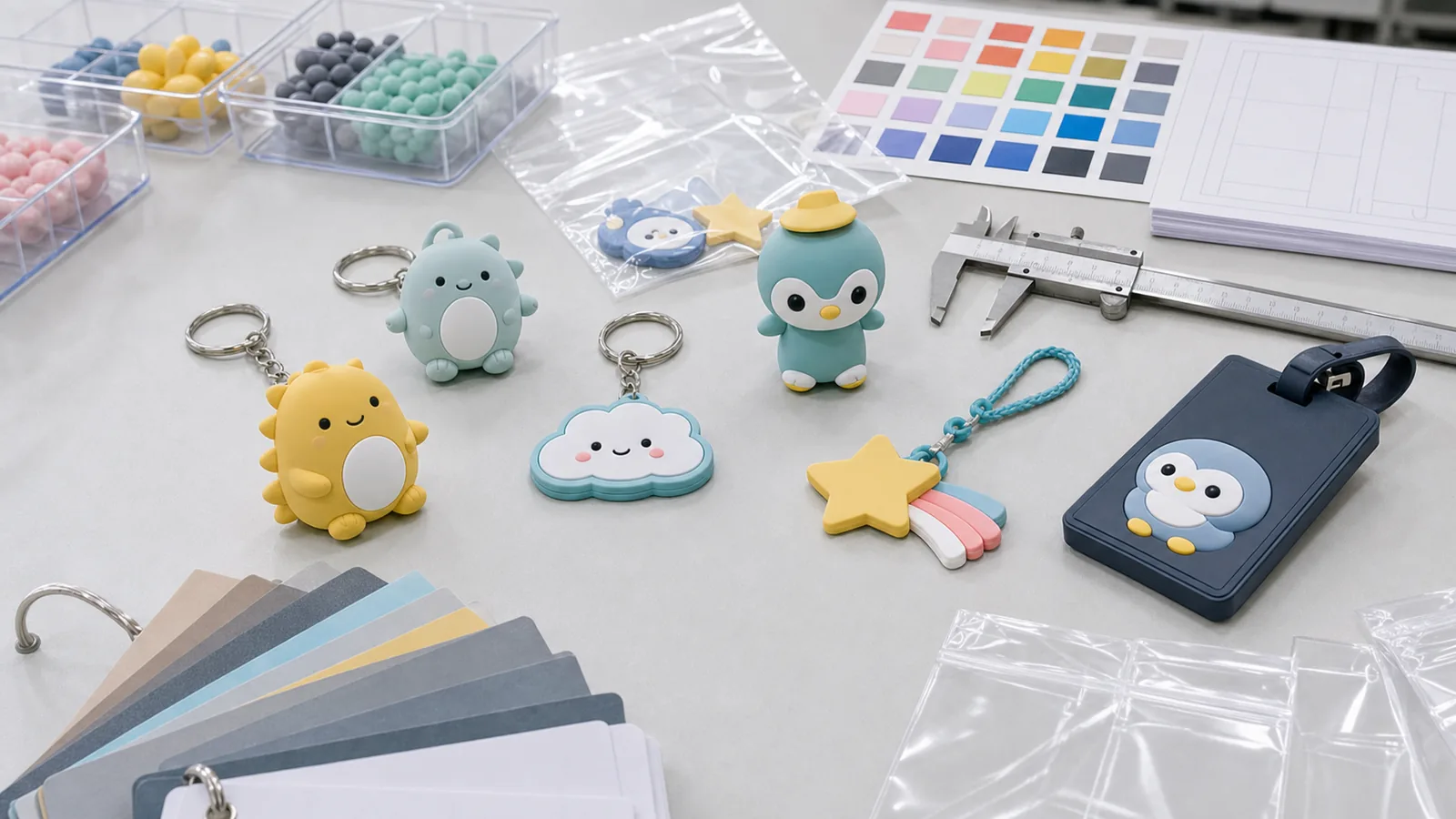
Main Factors That Increase Mold Cost
For PVC goods, mold cost is not simply higher because the item is larger. It changes with the number of surfaces the mold must reproduce, deep relief, release direction, small parts, and color separation. For the first quotation, provide enough information for the factory to judge the mold structure instead of guessing conservatively.
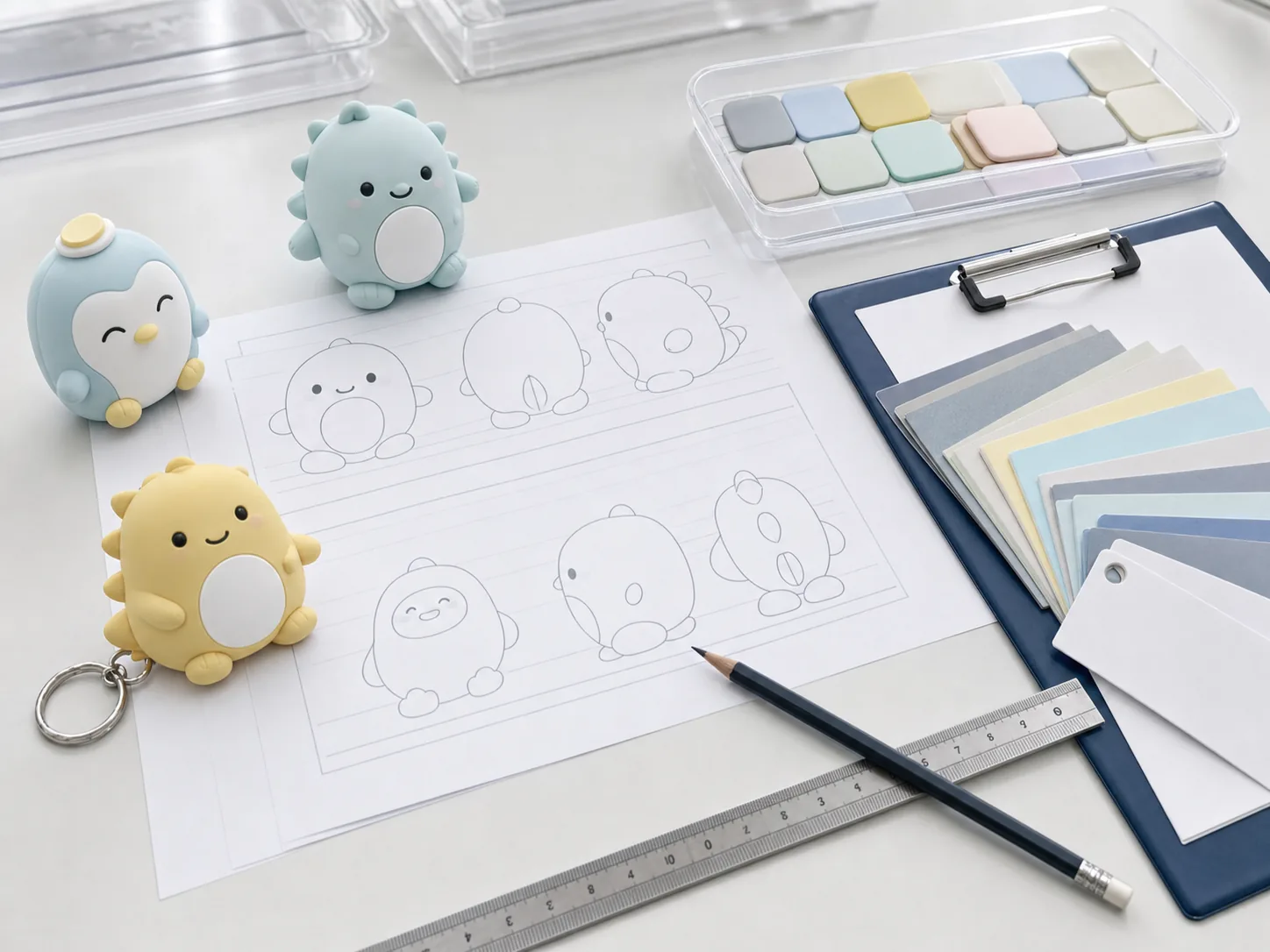
Shape Design That Helps Control Mold Cost
To keep the design recognizable while controlling mold cost, organize the character outline, thickness, and parting line early. For character goods, rounded details can preserve a friendly look while a simple release direction keeps the item easier to mass produce.
- Round sharp corners and reduce tiny details that are likely to chip or show uneven paint.
- Avoid over-modeling the back side when the front view carries most of the value.
- Check whether several characters can share a base, back structure, or hardware position.
- Judge small separate parts by both visual value and assembly cost.
When a quotation is based only on a rough image, the factory often estimates difficult conditions on the safe side. Clarifying front, side, and back priorities helps remove unnecessary mold requirements.
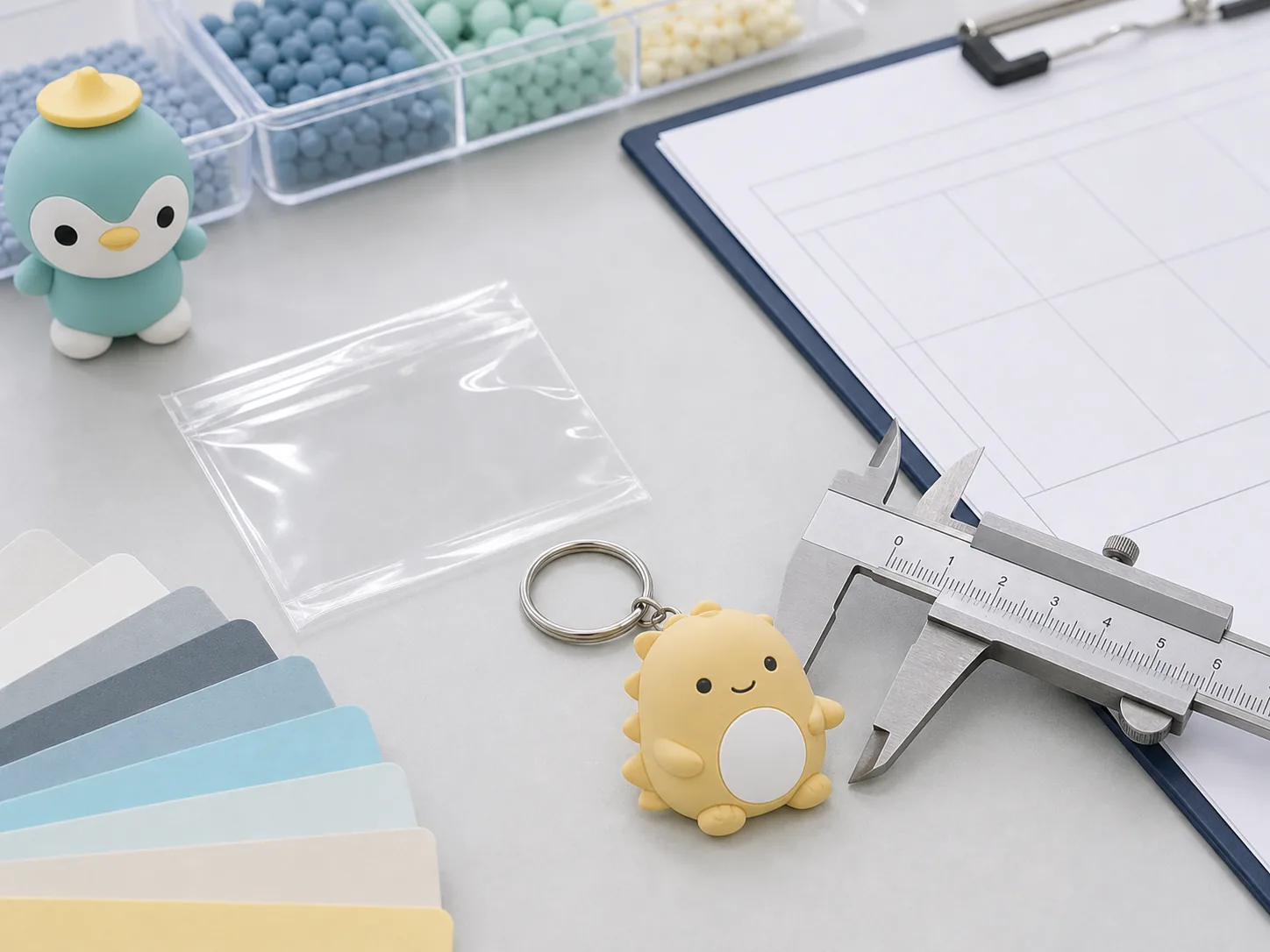
How to Choose 2D, Semi-3D, or Full 3D
Even for the same character, 2D, semi-3D, and full 3D require different mold structures and production controls. Decide the selling price, use case, and viewing angle first so the format does not create unnecessary mold investment.
| Format | Best for | Watch points |
|---|---|---|
| 2D PVC | Keyrings, magnets, flat charms | Relief is limited, so color count and outline cleanup matter. |
| Semi-3D | Goods where a face or logo needs slight raised detail | Large height differences can make paint boundaries harder to control. |
| Full 3D | Small figures and 3D mascots | Confirm front/back/side modeling, part split, and sample modification cost. |
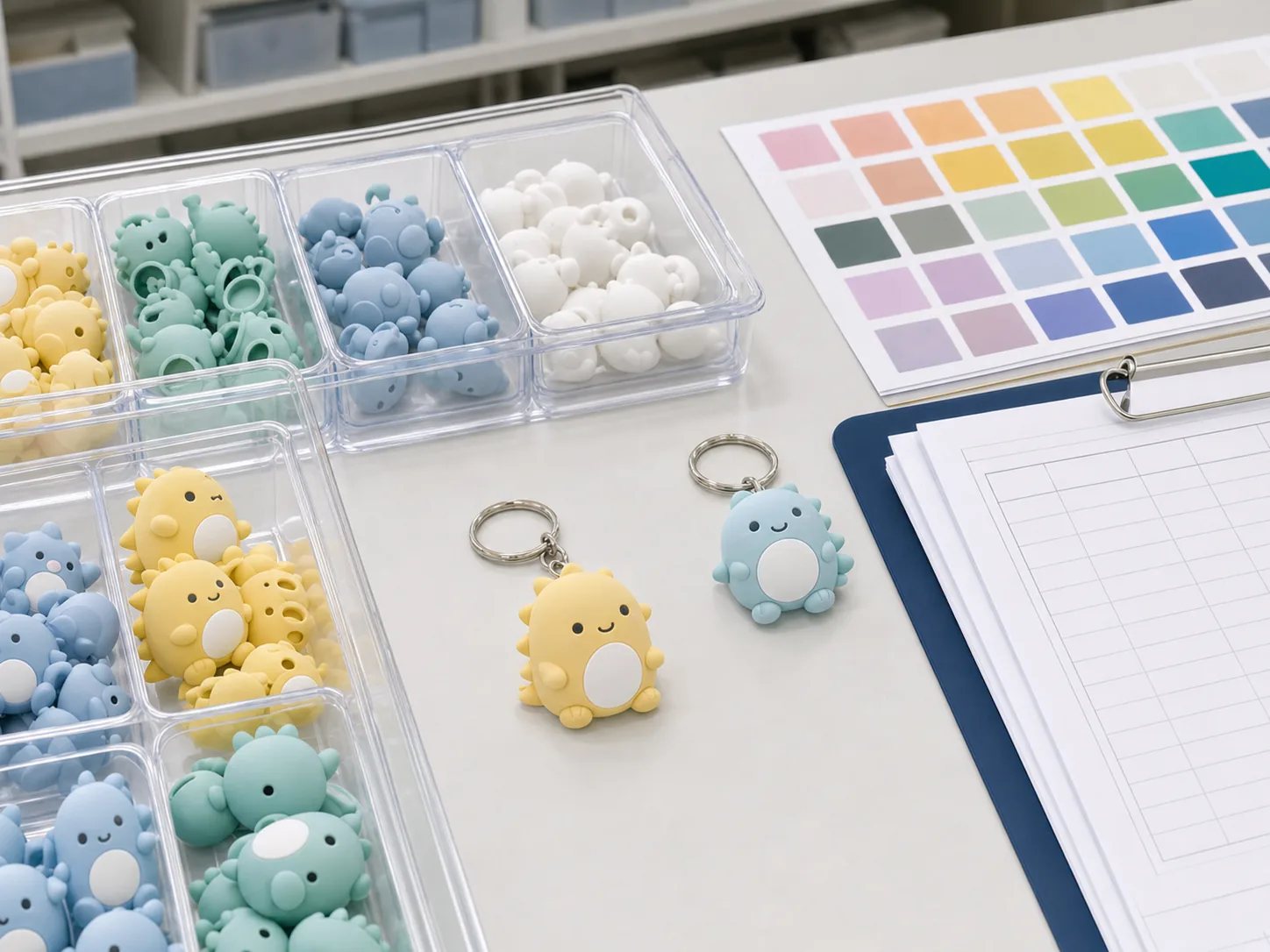
Separate Color-Change SKUs from New-Mold SKUs
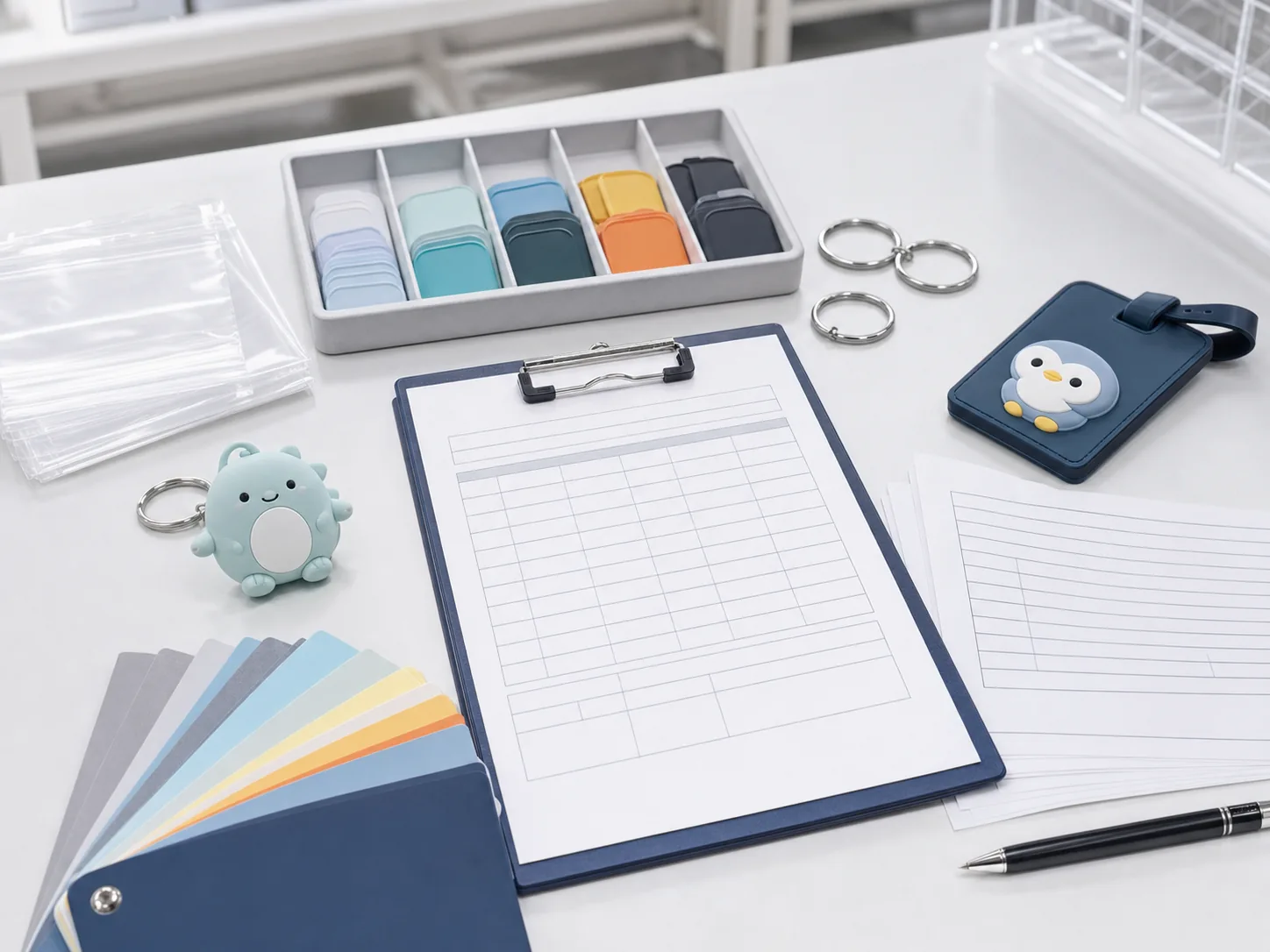
In a series line, more SKUs make quotation more complex. However, not every SKU needs a separate mold. Separate SKUs that only change color from SKUs that change facial parts, small accessories, or the entire shape.
Materials to Prepare Before Requesting a Quote
To compare mold costs correctly, quote multiple options under the same conditions. When specifications are aligned before quotation, it becomes easier to see whether price differences come from conditions or supplier pricing.
- Front, side, and back design files, or a rough layout showing the intended direction.
- Finished size, thickness, hardness, color count, and surface finish.
- Quantity per SKU, color-change range, and whether separate parts are needed.
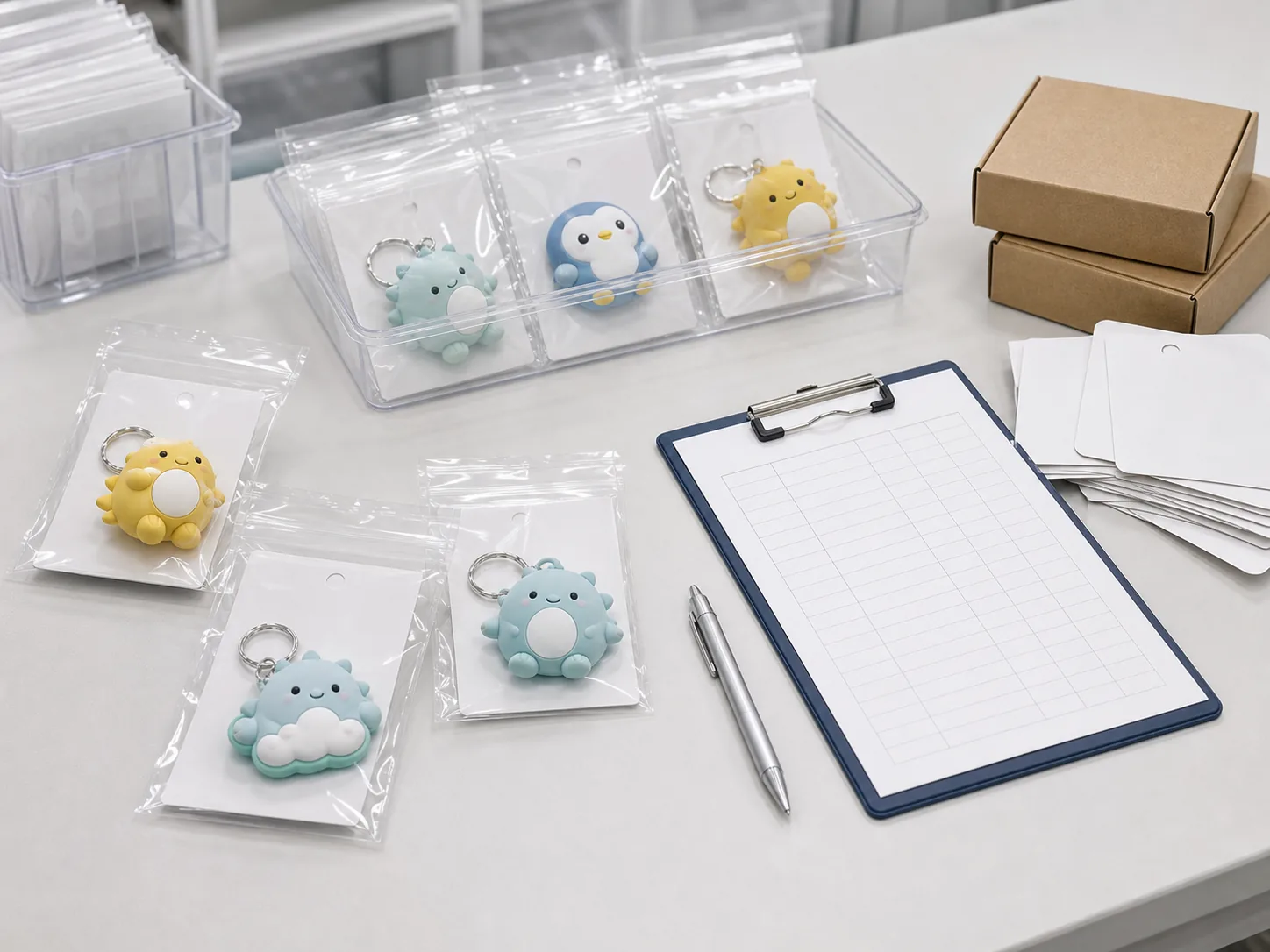
- Packaging format, backing card, OPP bag, carton, labels, and QC conditions.
- Expected sample revision rounds, approval flow, and target mass-production start date.
The Boundary Between Sample Revision and Mold Modification
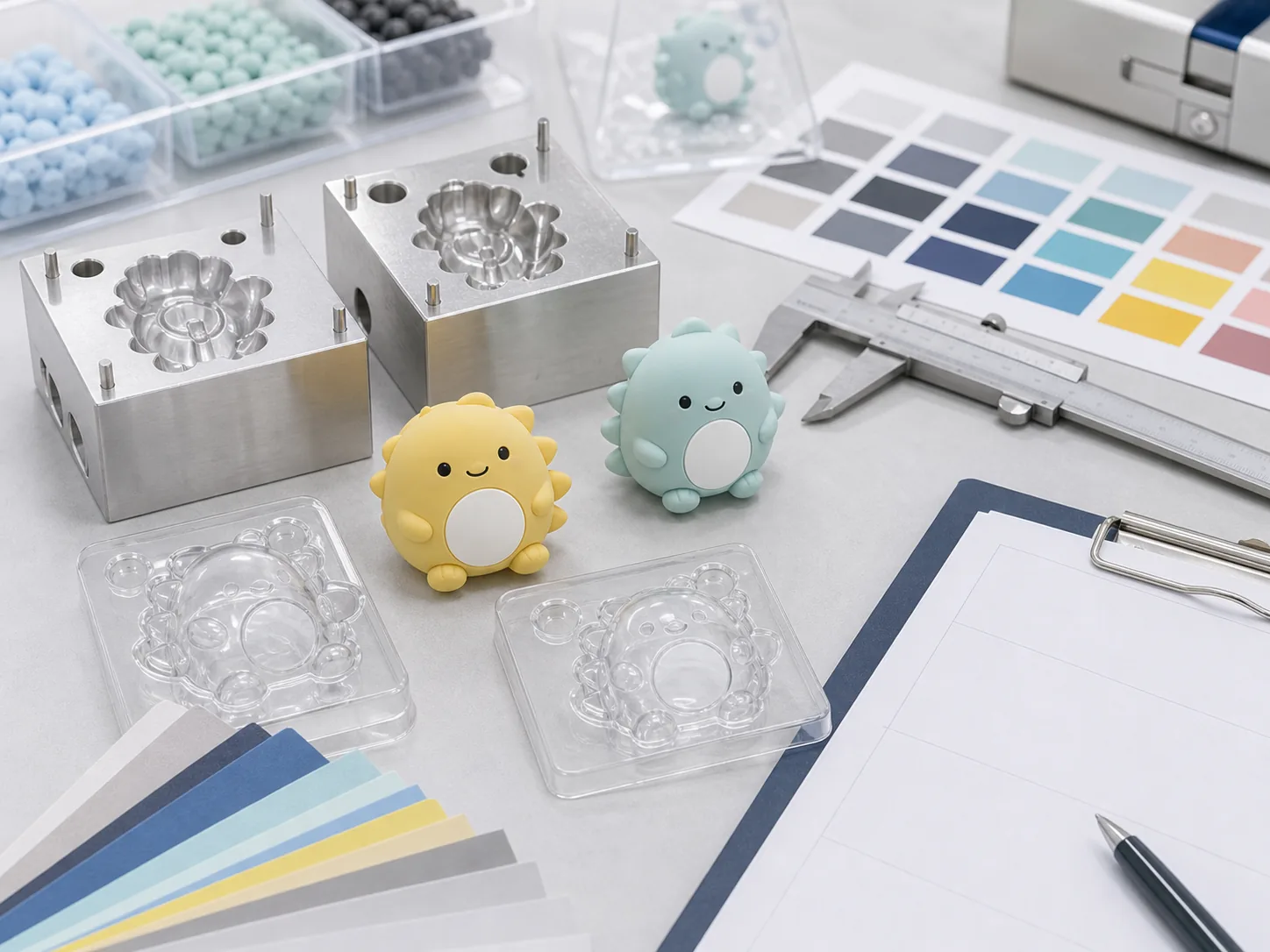
After the first sample, some changes can be handled through color adjustment or paint-position tuning, while others require mold modification. Knowing which revisions are likely to add cost helps buyers make sample approval decisions faster.
| Revision item | Cost impact | When to check |
|---|---|---|
| Color tone and paint position | Usually easier to adjust, but many colors increase labor. | Check with color references and the approved production standard sample. |
| Thickness, outline, relief | More likely to require mold modification. | Check early with a white sample or first sample. |
| Added parts or pose change | May lead to another mold or extra assembly steps. | Decide during design review before quotation. |
Quality Risks When Mold Cost Is Reduced Too Far
Reducing mold cost is not a problem by itself. The risk appears when necessary thickness, practical release direction, paint boundaries, and mass-production QC standards are reduced at the same time. Evaluate sample revision cost, inspection cost, and delivery risk together with mold cost.
- Too many tiny details can cause chipping, color shift, and uneven paint in mass production.
- Very small parts can deform after molding or create assembly defects.
- If packaging is decided later, backing card size or carton quantity may trigger requotation.
- Starting production without an approved standard sample makes SKU-by-SKU judgment unclear.
Checklist Before Consulting a China Factory
Organize the following items before contacting suppliers so mold cost and unit price can be compared under the same conditions.
Discuss PVC Shape Design and SKU Planning Before Quotation
Send your rough design, target size, SKU count, quantity, and packaging conditions. We can help organize the quotation conditions before mold cost is fixed.